
.png)
Thank you for asking one of our favorite questions: What is a credit union?
In short, credit unions are not-for-profit financial institutions who exist to serve their local communities.
Our not-for-profit structure is our superpower - it allows us to empower our members with lower interest rates on loans and competitive yields on savings accounts. We only charge the fees we absolutely have to so we can cover our operating expenses and continue helping people.
Let's continue! Knowing the key differences between credit unions and banks is important to help determine which is best for you.
Key Differences:
1. Membership
Credit unions serve members. Banks serve customers.
Anyone can become a customer at a bank, but credit unions are required by law to have membership requirements for people to become a member of the credit union.
For example, at Copper State CU, we help those who live, work or worship in the state of Arizona. Other credit unions may have fields of membership that are a little more restrictive. More specifically, some may require you to have a certain employer, religion, or student status.
2. Not-For-Profit
Credit unions are unique because of their not-for-profit status. They are owned by the members they serve and are overseen by a Board of Directors who is elected (you guessed it!) by their members.
On the contrary, banks are privately owned or publicly traded with the goal of making a profit for their owners or shareholders.
This is one of the key factors that define credit unions vs banks.
3. Community Focus
Credit unions were created to focus on keeping their members happy and improving the communities they serve. That's why you can expect more friendly and personalized service, plus ongoing initiatives like financial education, community volunteering and charitable donations.
.png?width=350&height=350&name=Bite%20of%20Reality%20(2).png)
We Provide:
- Free Financial Counseling
- Community Engagement
- Community Sponsorships
- Higher Education Scholarships
- First-Time Homebuyer Grants
4. Shared Branching
Because credit unions are locally based with fewer branch locations than banks, many credit unions are a part of an alliance through the CO-OP Shared Branching Network. This allows credit union members to access 55,000+ Free ATMs and 5,600 shared branches in the country, while still being a loyal member to their home branch.
.png?width=792&height=374&name=copper%20state%20credit%20union%20(2).png)
5. Fees and Interest Rates
Credit unions don't have the same pressure as banks do to create a profit, so many credit unions will offer lower or fewer fees than a bank. An example of this is our free CashBack Checking Account1 with no monthly or yearly maintenance fee.
We're also well known for offering some of the most competitive interest rates on the market. At Copper State CU, we are transparent with our rates and have these visible on our product pages:
- Auto Loans2
-1.webp?width=265&height=265&name=Woman%20Using%20A%20Copper%20State%20CU%20Debit%20Card%20(2)-1.webp)
- Mortgage Loans3
- Home Equity Loans4
- Personal Loans5
- CashBack Checking6
- High-Yield Savings7
- Certificates of Deposit8
It's important that our members understand what goes into calculating their interest rate, such as credit score.
6. Insurance
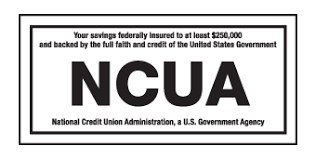
When thinking about credit unions vs. banks, credit unions are insured by the National Credit Union Administration (NCUA) rather than the Federal Deposit Insurance Corporation (FDIC). Although the organizations are different, both types of financial institutions offer the same coverage of $250,000 per person. ✅
All in All
It's a big decision deciding who to bank with! Keep up the great research and be sure to pick the financial institution that aligns with your needs and values. You deserve the best. ❤️

This article is intended to be a general resource only and is not intended to be nor does it constitute legal advice. Any recommendations are based on opinion only.
1For members who prefer paper statements, a $2 monthly fee will be assessed to their account, except for those members over the age of 65 or 17 years of age and younger. Minimum balance requirements apply. You must maintain a balance at least equal to $5,000.00 in your account each day in order to earn the disclosed APY. If interest is accrued, payment will be reflected in member’s monthly statements. Fees may reduce earnings on the account.
2All loans subject to approval. Rates, terms and conditions are subject to change and may vary based on creditworthiness, qualifications and collateral conditions. Membership is required. APR = Annual Percentage Rate.
3APR= Annual Percentage Rate. Rates, terms and conditions are subject to change and may vary based on credit worthiness, qualifications and collateral conditions. All loans are subject to approval. For a $250,000 loan with a 20% down payment at 7.411% APR for a 30 year term, the monthly payment would be $1364 (excluding property tax and insurance); for a $250,000 loan with a 20% down payment at 6.964% APR for a 15 year term, the monthly payment would be $1,770 (excluding property tax and insurance). 1% Origination Fee may apply.
4APR=Annual Percentage Rate. Rates, terms and conditions are subject to change and may vary based on credit worthiness, qualifications and collateral conditions. All loans are subject to approval. Rate shown is for 60 month term. 120 and 180 term loans are also available. Contact us for details. Minimum amount: $15,000 - Maximum amount: $350,000. Property insurance is required and will be verified. No prepayment penalty. An origination fee of $300-$800 will apply based on your total loan amount. Membership is required.
5All loans subject to approval. Rates, terms and conditions are subject to change and may vary based on creditworthiness, qualifications and collateral conditions. Membership is required.
6CardCash™ terms and conditions here
7Dividend rates are subject to change after the account is opened. Fees may reduce earnings on the account.
8A penalty may be imposed for early withdrawal. The amount of the penalty depends on the term of the account. For Accounts with a term to Maturity that is equal to or less than 6 months, the penalty imposed will equal 60 days' dividends. 12 months, will equal 90 days' dividends. Equal to or greater than 24 months, but less than 36 months, will equal 180 days’ dividends. Equal to or greater than 36 months, will equal 365 days’ dividends.


