

If you have been hearing that credit scores are changing, you are not imagining it!
2026 is shaping up to be a transition year for how lenders evaluate borrowers, especially for mortgages. Fortunately, most of the habits that help your credit stay healthy are not changing.

The Big Shift: New Scoring Models
For those wondering "Are credit scores changing?" — this is a big one!
Mortgage lenders can now use newer models, like VantageScore 4.0, which consider additional information such as rent, utilities or phone/internet payments.
This can help more people, especially those with limited or “thin” credit histories, have a score on record..png?width=316&height=319&name=Man%20paying%20bills%20online%20(4).png) It does not guarantee loan approval, but it does gives lenders a fuller picture when evaluating applications, and it highlights how credit scoring is evolving to include a wider range of financial behaviors.
It does not guarantee loan approval, but it does gives lenders a fuller picture when evaluating applications, and it highlights how credit scoring is evolving to include a wider range of financial behaviors.
Lenders are also adopting FICO 10, which looks beyond a single snapshot to your credit patterns over the past two years. This means consistent habits matter more than short-term fixes.
Other Changes to Watch in 2026
Credit scoring isn’t just getting a facelift – it's evolving in ways that could impact how you borrow and manage debt. Here’s what else is on the horizon:
Buy Now, Pay Later (BNPL) Reporting
Have you ever wondered if Klarna or Afterpay affects your credit score? We can confirm, BNPL plans will start showing up on credit reports. This can help build credit if you pay on time – however, missed payments could hurt your score.
Medical Debt Is Fading Out
Paid medical collections and debts under $500 are disappearing from reports, reducing surprise dings for many borrowers.

Stronger Consumer Protections
Updates to the Fair Credit Reporting Act will speed up dispute timelines, require better documentation for errors, and strengthen identity theft safeguards. 💪

What’s Staying the Same
The fundamentals of credit health are not changing. No matter which scoring model a lender uses:
• On-time payments still matter most. 💯
• Lower balances relative to your limits (a.k.a. credit utilization) remain important.
• Length of credit history still plays a role, so older accounts often help.
• New credit and how often you apply still factors into your score.
• A credit mix that reflects a variety of credit types (like credit cards1, auto loans2 or a mortgage3) can positively impact your score.
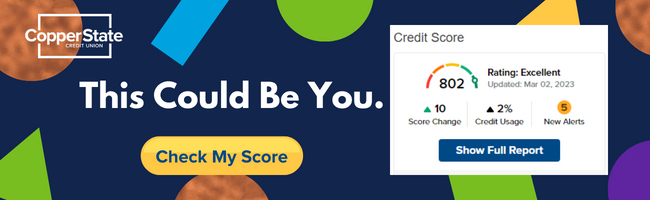
Most banks and credit unions provide a free credit score tool in your banking app making it easy to check in on your score and see where you can improve. Because different lenders use different credit score models, you may see slightly different scores between financial institutions.
How to Prepare
1. Monitor Your Credit Reports
Check your reports regularly to catch mistakes or fraud early.
👉 Use AnnualCreditReport.com for free yearly reports from all three bureaus and set alerts for new accounts or major changes.
2. Confirm Which Scoring Model Your Lender Uses
Scores vary by model, so ask your lender whether they use FICO, VantageScore, or both. Knowing this helps you understand differences and focus on the right credit habits.
⭐ At Copper State CU, we use VantageScore 4.0 to help us make loan decisions.
3. Strengthen the Controllable Factors
You are not able to choose the scoring model, however you can pay on time, aim to keep utilization below 30%, and maintain older accounts. It may be a good idea to automate your credit card minimum payments to avoid late fees and protect your score.
4. If You’re Planning to Buy a Home, Start Early
Credit is only part of the mortgage equation – debt-to-income, employment, and down payment matter too. Aim to budget and debt plan 6–12 months ahead to show stability and avoid surprises.
5. Get Connected
Ask your lender which score they use and what factors matter most. For broader guidance – budgeting, debt management, or big financial goals our online resource center is a wonderful tool and our team is happy to serve you.
We also have a non-profit partner who specializes in financial counseling. Chat with an expert at GreenPath for free when you mention Copper State Credit Union. Here's to taking a step forward to better your financial future. 😊

This article is intended to be a general resource only and is not intended to be nor does it constitute legal advice. Any recommendations are based on opinion only. Rates, terms and conditions are subject to change and may vary based on creditworthiness, qualifications, and collateral conditions. All loans subject to approval.
1The creditor and issuer of these cards is Elan Financial Services, pursuant to a license from Visa U.S.A. Inc.
2For a 72 month term, the amount financed must equal or exceed $15,000. For an 84 month term, the amount financed must equal or exceed $25,000. Refinanced auto loans must be from another financial institution. Rates listed are the lowest and highest annual percentage rates available. Actual APRs and term depend on credit history, type of product and our underwriting standards. For each loan request, Copper State CU will determine the LTV (Loan to Value) using MSRP for new vehicles and Kelley Blue Book retail for used vehicles.
3APR= Annual Percentage Rate. Rates, terms and conditions are subject to change and may vary based on credit worthiness, qualifications and collateral conditions. All loans are subject to approval. For a $250,000 loan with a 20% down payment at 7.411% APR for a 30 year term, the monthly payment would be $1364 (excluding property tax and insurance); for a $250,000 loan with a 20% down payment at 6.964% APR for a 15 year term, the monthly payment would be $1,770 (excluding property tax and insurance). 1% Origination Fee may apply.


