

Do you have multiple debts that you pay each month, each with its own due date?
Keeping up is tricky, and a single missed payment can cost you a late fee and a hit to your credit score. Many Arizonans find debt consolidation a way to simplify payments and cut down on monthly interest.
Let’s check out how debt consolidation works and when it might be worth considering.
What Is Debt Consolidation?
Debt consolidation is when you take out a new loan to pay off two or more debts. It’s often used to pursue a lower interest rate, a more manageable monthly payment or simpler repayment.
Debt consolidation doesn't make your debt go away, and it doesn't prevent you from accruing new debt after you consolidate. It does reorganize your debt to make repayment easier to manage and it may reduce interest costs depending on the terms.
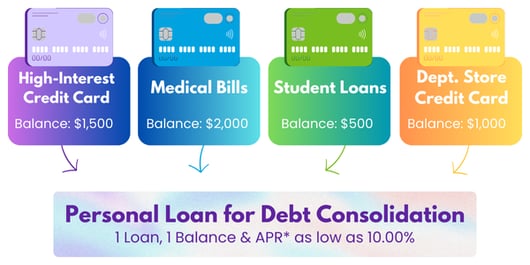
Let’s say you have:
- High-interest credit card debt
- Medical bills
- A student loan
With debt consolidation, you take out a new loan to pay off all of these balances. You might take out a home equity loan,1 personal loan2 or do a credit card3 balance transfer. If the new loan has a lower interest rate, you may pay less interest over time. It also gives you one monthly payment, which can be easier to keep up with.✅
How Does Debt Consolidation Work?
Debt consolidation is pretty straightforward! The goal is to combine multiple balances into one payment so your payoff plan is easier to manage and more affordable.
Here’s how it works:
-
Add up your debts: Find out the total amount you owe, how much you are paying each month and the interest rates.
- Compare loan options: Review different lenders and loan options. Compare interest rates, terms, fees and qualification requirements.
- Apply for a loan: Once you’ve found an option that fits your budget and repayment timeline, apply. Many lenders let you apply online, by phone or at a branch.
- Pay off your existing debts: If you’re approved, use the loan funds (or credit line) to pay off your current balances in full.
- Make a single monthly payment: With your debts consolidated, you now have just one payment to keep up with each month.
- Make a plan for future spending: If you consolidate your debt but continue to accrue more, your situation will only worsen over time. Consolidation is not the "cure" - a spending plan is! Talk to a trusted financial counselor to make sure you understand your cash flow situation and spending habits to avoid racking up more debt.
Is Debt Consolidation A Good Idea?
Debt consolidation may be worth considering when you have a good credit score. It can make sense when you’re juggling multiple high-interest balances, like credit cards or store cards, and you may qualify for a new loan with a lower rate.
A new loan may also come with a longer repayment term, which can provide breathing room if your current payments are stretching your budget. Debt consolidation is often most effective when you’re committed to not taking on new debt while you pay off the balance. We love to chat with Arizonans about making healthy financial habits to stay on track toward debt payoff. It can be tempting to use credit again right after that balance has been consolidated!
However, consolidating credit card debt and other obligations isn't always the right move. It might not make sense if your credit score is low or if your existing loans have early payoff or transfer fees that outweigh the potential savings.💲
Some options, like home equity loans, also require that you have enough equity to qualify and may include closing costs. Debt consolidation may also not be the best option if there's a risk you’ll run up credit card balances again.
What Are The Pros And Cons Of Debt Consolidation?
Before you apply for a debt consolidation loan, it’s important to understand both the benefits and drawbacks. Here are some important pros and cons to consider:

Pros
- One single monthly payment: You won’t have to keep up with multiple due dates each month.
- Potentially lower interest rate: Depending on your creditworthiness and market conditions, you may qualify for a lower rate, which can reduce interest costs.
- Can improve credit utilization ratio: Paying off credit card balances may help your credit score by increasing your available credit.
- Clear payoff timeline: You’ll know exactly how much you need to pay each month and how long it will take to pay off your balance. This can reduce stress and make budgeting easier.
Cons
- It could cost more: If your new loan has a longer repayment term, you may end up paying more interest than if you continued paying down your current balances.
- Loan interest rates may currently be high: Loan rates depend on market conditions and Federal Reserve actions. If rates are high, consolidating may not reduce interest costs.
- Fees may not make it worth it: Balance transfer fees, origination fees and closing costs may outweigh the benefits of consolidating.
- Risk of accumulating new debt: If you run up credit card balances again after paying them off, you may end up in a worse financial position. We suggest free and confidential financial counseling with GreenPathTM before consolidating debt to make sure you have a plan for the future and can avoid repeating the debt cycle.
What Are The Different Ways To Consolidate Debt?
When someone says they’re getting a “debt consolidation loan,” they’re usually talking about one of several debt consolidation options that can combine multiple balances into a single monthly payment. Each option works a little differently and may offer unique benefits depending on your goals, your credit and how quickly you want to pay off what you owe.
Here are some common loan options:
Home Equity Loans
A home equity loan is similar to a personal loan in that it often comes with a fixed interest rate, fixed monthly payments and a clear payoff schedule. The key difference is that your home’s equity is used as collateral. Because it’s a secured loan, rates may be more competitive than unsecured options depending on your credit and loan terms and closing costs may apply.
Personal Loans
A personal loan is a popular way to consolidate debt because it doesn’t require collateral. Costs and fees vary by lender, and interest rates may be lower than credit card rates depending on your credit and loan terms.
With a personal loan, your monthly payment typically stays the same throughout the term. Since most personal loans have a fixed interest rate and a clear payoff schedule, it's easier to plan ahead and stick to your budget!
Balance Transfer Credit Cards
A balance transfer is when you move balances from existing credit cards to a new card. Some cards offer an introductory APR for a limited time, which may help reduce interest costs during the promotional period. For example, you may find balance transfer offers with introductory rates for a set period.💳
Debt Consolidation Loan Comparison
This table provides a quick comparison of the most common loans that are used to consolidate debt:
|
Loan Option |
Interest Rates |
Fees |
Time to Pay Off |
|
Rates may be more competitive than some unsecured options |
Closing costs may apply |
Often 5 to 20 years |
|
|
Fixed rates may be lower than credit card rates |
Origination fee may apply |
Often 2 to 7 years |
|
|
Introductory rates may be available for a limited time |
Balance transfer fee may apply |
Varies based on balance and payments |
Rates, fees and repayment timelines vary by product and creditworthiness. This chart is a general comparison and is not a commitment to lend.
Debt Consolidation FAQs
These frequently asked questions cover what to expect, so you can decide if debt consolidation is worth considering.
How Does Debt Consolidation Affect Your Credit?
Many people wonder, “does debt consolidation hurt your credit?” Consolidating debt and paying off your credit cards can lower your credit utilization ratio, which may help improve your credit score over time. However, a hard credit check may be required when you apply for new financing, which can cause a small, temporary dip in your score.
Does Debt Consolidation Affect Buying A Home?
Consolidating debt may help improve your DTI over time, which can support mortgage qualification. Keep in mind that lenders look at several factors when reviewing an application, including your credit score, payment history and overall financial stability.
%20(700%20x%20500%20px).png?width=442&height=316&name=house%20(400%20x%20400%20px)%20(700%20x%20500%20px).png)
How Long Does Debt Consolidation Take?
It depends on the type of loan you apply for. Personal loans and balance transfers can move fast in some cases. Home equity loans usually take more time since a property valuation and underwriting review are typically involved, which can take several weeks.
Can I Consolidate Debts From Multiple Lenders?
Yes. In many cases, you can consolidate debts from multiple lenders, as long as the new loan amount and qualification requirements allow it.
Is Debt Consolidation The Same As Refinancing?
No. Refinancing replaces one existing loan with a new loan, often to change the rate, term or payment. Debt consolidation combines multiple debts into one new loan or credit line so you have a single payment to manage.
Consolidate And Take Control
The right approach depends on your goals, your timeline and what fits comfortably in your budget. Once you’ve picked a direction, the next step is simply choosing the option that supports your payoff plan.
Ready to put a plan in place? A personal loan can help you combine multiple balances into one predictable monthly payment.

Thinking about a balance transfer instead? Take a look at credit card options with competitive rates that may fit your payoff strategy.

Own a home with equity? A home equity loan may help you simplify repayment with one monthly payment.

This article is intended to be a general resource only and is not intended to be nor does it constitute legal advice. Any recommendations are based on opinion only. Rates, terms and conditions are subject to change and may vary based on creditworthiness, qualifications, and collateral conditions. All loans subject to approval.
1APR=Annual Percentage Rate. Rates, terms and conditions are subject to change and may vary based on credit worthiness, qualifications and collateral conditions. All loans are subject to approval. Rate shown is for 60 month term. 120 and 180 term loans are also available. Contact us for details. Minimum amount: $15,000 - Maximum amount: $350,000. Property insurance is required and will be verified. No prepayment penalty. An origination fee of $300-$800 will apply based on your total loan amount. Membership is required.
2All loans subject to approval. Rates, terms and conditions are subject to change and may vary based on creditworthiness, qualifications and collateral conditions. Membership is required.
3The creditor and issuer of these cards is Elan Financial Services, pursuant to a license from Visa U.S.A. Inc.


