
.png?width=800&height=800&name=Victim%20of%20fraud%20(4).png)
3 Red Flags Of A Scam
-
You're Contacted And Urged To Act Now
Scammers often call, text or email and lead with a sense of urgency that you must act now.
-
Your Personal Information Is Requested
Don't share your Social Security number, bank account details, authentication codes or passwords.
-
You're Asked To Send Money
Scammers often demand gift cards, wire transfers or electronic payment.
.png?width=643&height=657&name=Scam%20Fed%20Flag%20(1).png)
Common Scams
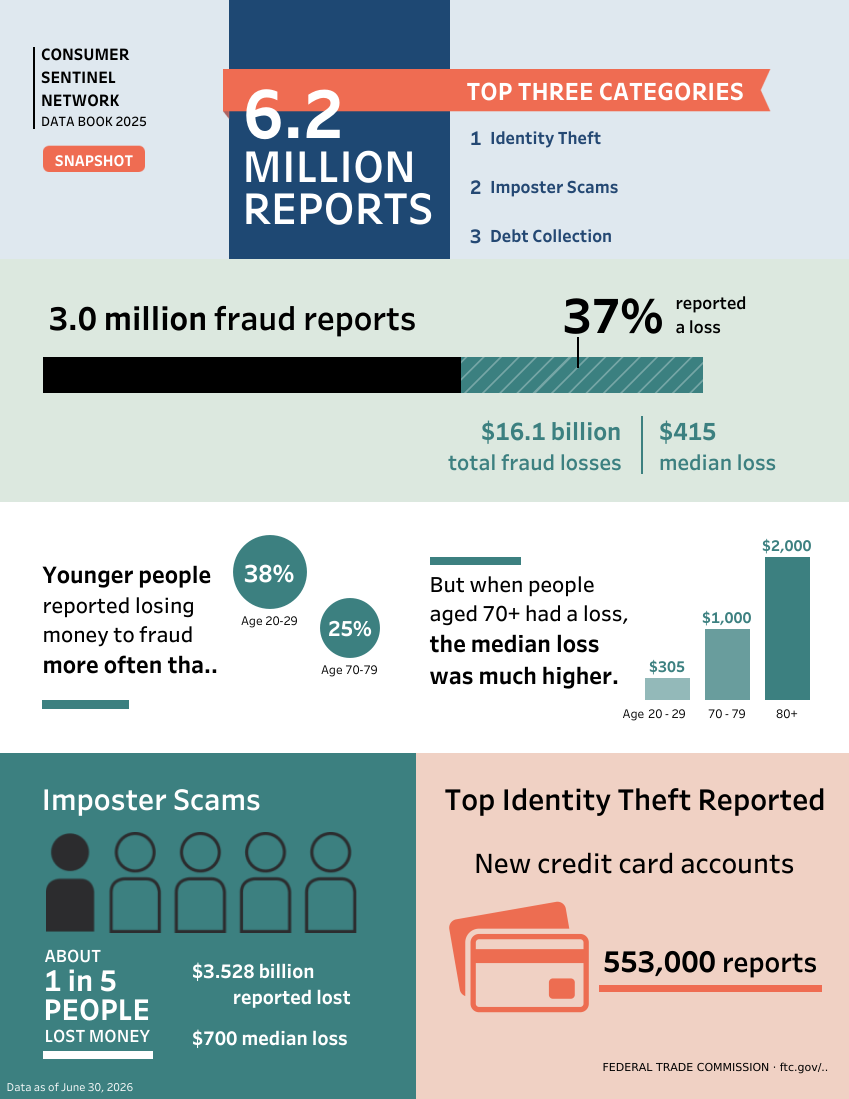
Plain and simple - scams are downright harmful. They exploit trust, compromise personal and financial security and can cause a huge financial loss for those that fall victim. It's crucial for you to be vigilant and to stay informed. At Copper State CU, we will do our best to keep you informed of the most current scams and how to protect yourself and avoid becoming a victim.
Employment Scam
Fake recruiters may pose as well-known companies with vague work-from-home jobs and quick pay. Don’t reply “YES” or “INTERESTED” or engage—once they have your attention, they may ask for money.
Investment Scam
Investment scams promise quick, low-risk profits in crypto, real estate, precious metals, or markets—often starting with free seminars before pushing costly coaching or “proven” systems.
Tech Support Scam
Tech support scammers use fake pop-ups, calls, texts, or ads to claim your computer has a problem. They may request remote access, fake a virus, and demand payment by gift card, wire transfer, or cryptocurrency.
Romance Scam
Scammers build trust through social media, then use the relationship to ask for money for emergencies, travel, medical bills, or crypto investments.
Digital Wallet Scam
Digital wallet scams trick you into sharing payment details or a one-time code, letting fraudsters add your card to their own device and use your account.
Family Emergency Scam
Scammers can use AI to clone a loved one’s voice and claim they’re in trouble, like being in jail after a crash. Don’t send money—verify the story directly with family first.
.png "Victim of fraud (7)")
.png "Victim of fraud (6)")
.png "Victim of fraud (8)")
.png "Victim of fraud (9)")
Always Be Alert
Credit unions and banks aren't the only ones trying to protect you. Check out these resources from the United States Postal Inspection Service. For a more in depth look into these scams visit the USPIS website.
.png?width=400&height=400&name=Mail%20Fraud%20(1).png)
Think You've Been Scammed?
If you think you've been a victim of fraud, taking prompt and appropriate action is crucial to minimize the potential damage and increase the chances of recovering lost funds or securing your personal information. Here is a step-by-step guide on what to do if you've been a victim of fraud.
1. Report to Law Enforcement
Contact your local law enforcement or the appropriate cybercrime unit to report the incident. Provide them with details of the fraud, including any communication you've had with the scammer and evidence of the fraudulent activity.
2. Contact Your Bank, Credit Union, or Credit Card Company
If the fraud involves unauthorized transactions on your bank account or credit card, contact your financial institution immediately. Report the incident, provide details of the transactions, and ask for guidance on how to proceed.
3. Change Passwords and Secure Accounts
Change your debit card PIN and passwords for all your online accounts, especially those related to banking, email, and social media. Enable two-factor authentication wherever possible to enhance account security.
4. Notify Credit Bureaus
Contact the major credit bureaus (Equifax, Experian and TransUnion) to place a fraud alert on your credit report. This alert makes it more difficult for identity thieves to open new accounts in your name.
5. Review and Monitor Accounts
Carefully review all your bank statements, credit card statements, and other financial accounts. Look for any unauthorized transactions and report them promptly. Monitor your accounts regularly for any suspicious activity.
6. File a Complaint with the FTC (Federal Trade Commission) or the BBB (Better Business Bureau)
File a complaint with the FTC directly by phone at 1.877.FTC.HELP (1.877.382.4357) or through their website. The FTC collects information that can help law enforcement agencies track and combat online fraud. You can also use the BBB's Scam Tracker. It's a free tool you can use to report or look up a scam.
7. Contact the Internet Crime Complaint Center (IC3)
Report the incident to the IC3, a partnership between the FBI and the National White Collar Crime Center (NW3C). You can file a complaint here.
8. Document Everything
Keep a record of all communication with the scammer, as well as any evidence of the fraud. This documentation can be valuable for law enforcement and financial institutions.
9. Be Wary of Follow-Up Scams
After being a victim of fraud, you may be targeted again by scammers offering assistance or claiming to recover lost funds. Be cautious of unsolicited offers and only communicate with trusted authorities.
10. Educate Yourself
Learn from the experience to avoid falling victim to similar scams in the future. Stay informed about common scams, practice online safety, and be skeptical of unsolicited communications. A great place to start is Banks Never Ask That. This website allows you to learn the signs of a scam, watch informative videos and even take a quiz to see if you think the pretend scenario is a scam or not.
If you are unsure about the appropriate steps to take, consider seeking advice from legal professionals, your bank, or law enforcement. The key is to act quickly, report the incident to the right authorities and take measures to secure your financial and personal information.
Spot A Scam In 1 Minute Or Less
Disclosure
Apple Pay is a trademark of Apple Inc., registered in the U.S. and other countries.
Google Pay is a trademark of Google LLC.
Samsung Pay is a registered trademark of Samsung Electronics Co., Ltd.